








Determine Class and Schedule Efficiency (and Earn More) With Walla's Class Utilization Report
This data can help you make more strategic studio decisions and optimize how and when you hold classes.

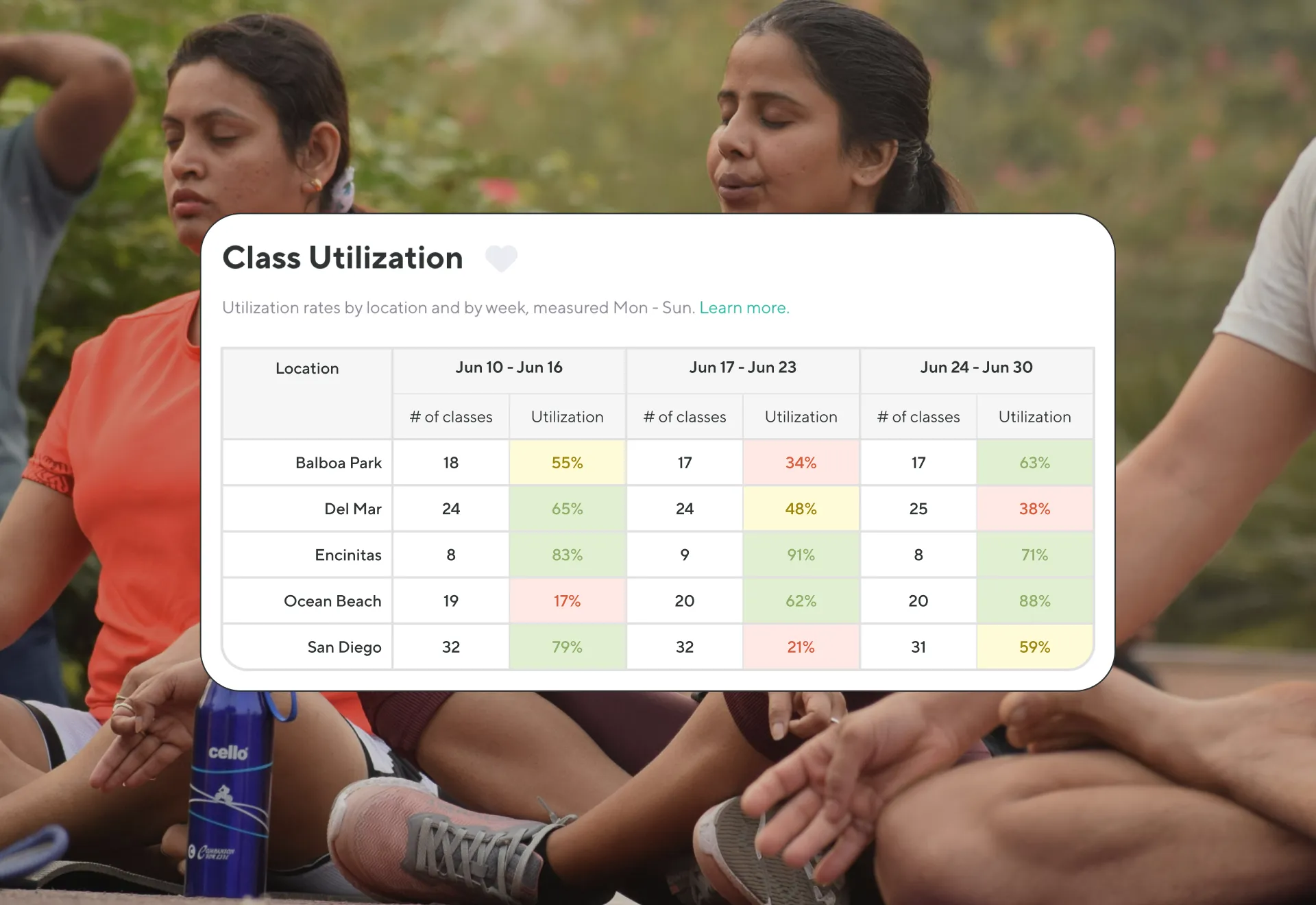
- Walla's Class Utilization Report measures the percentage of class spots checked in versus available, per week and per location.
- The data shows which classes should stay, which deserve more schedule time, and which times should change or be eliminated.
- Demand-driven scheduling fills classes, optimizes staff allocation, and gives single and multi-location studios a competitive advantage.
Creating and implementing a demand-driven scheduling strategy at your single and multi-location fitness studio is the key to significantly streamlining operational efficiency, client satisfaction, and overall business performance. By tailoring your class offerings based on preferences and attendance patterns, you’re setting yourself up for fuller, revenue-generating classes while optimizing staff allocation and giving your studio a competitive advantage. So how can you efficiently use data to be more strategic with schedule efficiency? With Walla’s Class Utilization Report!
This report allows you to measure the percentage of class utilization on a per-week, per-location basis, giving you the power to have a deeper understanding of precisely what the differentiators are (and aren’t) on your studio schedule. By being able to determine how practical specific classes are on your schedule based on a per location basis and how many clients have checked into classes (on an 8-week basis/cadence), you can make better decisions on whether:
- What specific classes should stay on your schedule
- What classes should be on your schedule more (revenue!)
- What class times should be changed—or even eliminated
The Class Utilization Report rate analyzes the total class spots checked in for all classes in a week divided by the total in-person class spots available for all classes that week, giving you accurate data in real time. This allows you to truly understand where and when classes belong on your schedule. So why should you look at this report—and how can measuring the percentage of class utilization significantly impact profitability? Here’s how this report can make a difference to your operations (and save you time and help you earn more money!).
1. Maximizing class attendance
Demand-driven scheduling: By understanding which classes and times are most popular at each location, your studio can adjust its schedule to meet demand, ensuring higher attendance rates and optimizing class fill rates.
Capacity management: Knowing utilization rates helps avoid overbooking or underbooking classes, ensuring that each session runs optimally maximizing revenue from each class.
2. Resource allocation
Efficient use of space: Your studio can allocate space more effectively by matching room sizes with class attendance, ensuring that larger rooms are used for high-demand classes and smaller rooms for less popular ones.
Instructor allocation: High-performing instructors can be scheduled for high-demand classes, enhancing the overall quality of the experience and potentially attracting more clients.
3. Pricing strategies
Dynamic pricing: Utilization data allows the studio to implement dynamic pricing strategies, such as peak pricing for high-demand times or discounts for off-peak times.
Package and membership adjustments: Insights from utilization can inform the development of membership packages and class bundles that align with usage patterns, enhancing member value and encouraging higher sales.
4. Operational efficiency
Cost reduction: Identifying underutilized classes can help reduce operational costs by consolidating or canceling these sessions and reallocating resources where they are needed most.
Energy and maintenance savings: Optimizing class schedules can reduce facility usage during low-demand times, saving utilities and maintenance costs.
5. Client satisfaction and retention
Tailored offerings: By tailoring class schedules to the preferences and habits of clients at each location, your studio can improve customer satisfaction, leading to higher retention rates and long-term revenue stability.
Feedback integration: Regularly monitoring utilization and adjusting schedules based on feedback ensures that clients feel heard and valued, fostering loyalty.
6. Marketing and promotions
Targeted campaigns: Utilization data can inform marketing efforts, allowing your studio to promote underutilized classes or times with targeted campaigns and special offers.
Incentive programs: Developing incentive programs to boost attendance during low-demand periods can be more effectively designed with precise utilization data.
7. Expansion and investment decisions
Strategic growth: Understanding utilization patterns across different locations helps make informed decisions about where to expand, which new locations to open, or where to invest in additional resources.
Capital allocation: Data-driven insights guide capital allocation towards high-performing areas, ensuring a better return on investment.
8. Benchmarking and performance tracking
Location comparison: Comparing utilization rates across different locations allows the studio to benchmark performance, identify best practices, and replicate successful strategies.
Continuous improvement: Regularly measuring and analyzing utilization helps identify improvement areas, ensuring that your studio continuously evolves to meet client needs and market trends.
Measuring class utilization on a per-week, per-location basis provides your fitness studio with crucial insights that drive better scheduling, resource allocation, pricing strategies, and customer satisfaction, contributing to increased revenue and profitability.
Ready to upgrade your studio?
Book a walkthrough with a studio specialist and see what running a studio on Walla actually feels like.
Learn MoreFrequently asked questions
Brittany Raine
Strategist. Storyteller.
Latest from the blog
Visit the blog →.jpg)
The Hidden Cost of Studio Software Downtime
.png)
Beyond the Class List: Why Your App Experience Is Your Studio Experience
.jpg)
5 High-Impact October Strategies to Drive Revenue, Retention, and Studio Growth

Stop managing your studio. Start growing it.
See Walla in 5 minutes — no pressure, just an honest look at what changes for your business.