








Why Potential Members Choose Another Studio (Myths vs Reality)
When it comes to getting your studio discovered online, it can be hard to know what actually works and what’s just noise. Do you need to pay to show up at the top of Google? How do I get more customers for less ad spend? Do you need an expensive agency to build a website that converts? Join us for a myth-busting session where we break down the biggest misconceptions about studio visibility, reviews, and websites. You will learn what actually helps studios get discovered on Google and what influences potential members' choices.
Three things you can set up this week.
Rethinking search visibility
Learn why studios do not need to pay to appear in the map pack and what actually drives local discovery.
Getting more from Google Business Profile
Understand why a one-time setup is not enough and what ongoing actions help studios stay visible.
Building trust without a big agency budget
See what actually makes a studio website convert and how reviews and simple automation help turn searches into bookings.
If you only have two minutes.
What's in the session
Read the session
0:05 Hello, everyone. Thank you so much for joining our Wallow webinar series, the March. We shifted it up this month, made it a Tuesday instead of a Thursday. So for those of you who were thrown off, I'm sorry, but it is for good reason because I wanted to get Jessica in here and talk to us all about our Google business profiles and showing up, standing out online. For those of you who have never attended one of our Walla webinar series, the goal of these is to learn something new and not overwhelm you all, but actually give you something that you can do in the next hour, in the next day to move the needle on your business. So we really try to keep them actionable, pretty concise, and make sure that you walk away from this with a clear action step that you can take. Couple of quick housekeeping things as we get started. You'll notice in this platform that we have that lives on our website, there are a couple of different ways to communicate. One is through chat on the right side. And if you wanna pop in there right now into the chat, introduce yourself, let us know what studio you're from, where you're coming from, that would be fantastic.
1:19 Say hello to your friends and fellow studio owners on the call. And then there's also a q and a section there. So as we get into the presentation, if you have a specific question you'd like answered by myself or by Jessica, please ask it in q and a because that way, somebody else might have the same question. They can upload it in there, and we can also mark it as answered once we've completed, the conversation or answered the question. So it just helps us track. But let's get into the meat of the conversation. Today, we are gonna be chatting with Jessica Wright who works with us here at Walla. She's the head of growth platforms and media at Walla and has over fourteen years of experience driving revenue across both software platforms and local businesses. So she's seen things from our lens, but also from your lens, and really specializes in SEO, paid media, building scalable growth marketing practices.
2:23 And today's focus is gonna be around local search. So I think all of us have spent a lot of time, on Google searching for different services or businesses in our towns or when we're traveling, but we also live in the world of having to use Google Analytics for our businesses. And it can certainly be overwhelming. So, today, we'll hope to demystify that a little bit and also talk through some myths that are out there. Jess, you wanna pop to the next slide, and I can just quickly share the myths that we'll be busting today in our presentation. Okay. So we hear these things all the time. We talk to studio owners all day every day, and the three areas we're gonna be focusing on are, a, I need to pay a lot of money to show up online. This is a very consistent thread that we hear that, gosh, I can't afford to spend a ton of money advertising on Google. I just can't win against these, you know, big franchises that are coming into my neighborhood, so I, you know, I'm stuck.
3:35 We'll definitely talk through how that's not true, and we can help you with that today. The next one is that my Google Business Profile, so the thing that you set up when you launch your website, start your business, is a one and done deal. That is very far from the truth, and we'll be explaining why it's important to stay on top of that all the time. And then lastly, and this is something that's been coming up pretty regularly, recently, is the expectation that you need to hire a big fancy brand agency, marketing agency to build your website to make it convert. There's a lot of chatter about losing leads on websites because they're just not designed to convert, and you need to spend a ton of money to engineer that system, but it's a lot easier than you think. So, Jessica, I am gonna hand it over to you and let you dive into the meat of the conversation. Thank you, Laura. And before I start, did you wanna hit that poll just so we can gather some of this?
4:37 Thank you. I'm gonna launch this. So, guys, I'm gonna be adding a poll here just talking about these three myths that we just discussed. Which of these do you believe? Have you told yourself? Have you heard? And maybe all of them. So you can hop on hopefully, the poll, you can see on your right side. Okay. Awesome. So far, paying big money to show up, is, no, jumping all over the place. Okay. Well, I'm gonna actually start with some background before I go into the mist so you can you can keep voting while I while I'm talking. But I wanna start with some background on the customer journey, what actually happens in Google. So when a new customer is searching for you, they pick up their mobile phone, and they search something like yoga near me, yoga Santa Barbara. And what happens here is you get these top three rankings that you see on the screen here. These are Google business profiles.
5:38 This isn't your website. This is what's optimizing your profile. And, usually, somebody will now look through your trust signals, your reviews, your information, and they'll click through to your website. Or they could go back. So this is showing going back in the search results and scroll down to a traditional search and click on your website. So what we're seeing here is that your Google business profile is actually usually the very first impression for new client searching, and your website comes next. Most studio owners will think that discovery starts maybe on Instagram or with their an instructor or a friend, but it is usually in Google, for net new clients. Alright. Back to the poll quickly. Definitely number one myth is that you have to pay big to show up online, and then that Google Business Profile is a set and forget is second, and then agencies and websites and all three are tied for third.
6:36 Awesome. I think that's the order we actually have them. Yeah. Exactly. I'm gonna I'm gonna continue with some more this background information. I'm setting the stage here. So, I wanna talk about the most common leaks we see in new customer acquisition in your digital experience. So we call these leaks because that's exactly what they are. You're spending money. You might get them right to the edge of booking, but then something breaks in your funnel, and they go somewhere else or they bounce. And so these the top things that we see are maybe an outdated Google business profile. I think one of these things, the biggest things here is just pure activity and engagement, which we'll get into in a little bit. On your website, it has two components. So one is you're not optimized for search, so you don't ever show up, so you're never visible. The second one there is if somebody actually does get to your website that maybe your flow is a little bit confusing or it might be missing links causing that user to bounce or not actually do what you want them to do. But both cost you, can be a leak in your funnel.
7:43 The last one is one that they that people usually think that they have. Right? And this is just like, oh, I have a few five star reviews. I'm good. But, we're seeing increasingly more that, Google's really looking at reputation and, not just that you have a positive reputation, but velocity matters. So, I don't say all these things to make you scared. We're gonna talk about them all today. The good news is that you likely do not have a, a demand problem. You likely have a demand capture problem. And so those are some simple fixes that we're just gonna chat through. Okay. Why this matters for you? So, Soshi did a study on they looked at 300,000 Google listings and found that those that are up in those top three map pack results receive a 126% more traffic than those that don't. And here's what I hope you understand is what Google is putting there isn't the people who are paying to play.
8:55 It's the one that Google trusts the most. And even with the AI search evolution, it's actually creating a big opportunity and really starting to level the playing field for those smaller businesses, smaller local studios, to that don't have big, large marketing budgets, as long as you're taking the right steps. Okay. So myth number one, which I think we've already even talked about. I need to pay to show at the top of search results. So let's start with kind of what happens and what we know here. So, you're probably familiar with the Google map pack or some people call it the local pack or the top three pack or there's many different names of it for it, but, just from being a consumer yourself when you're searching for something. These are the top three listings that show up when someone is searching. And what we do know is that Google ranks what gets to show here based on three different elements. So proximity is the first one, and that's just what it sounds like. It's how close your studio is to the person who's searching. It's not necessarily something we can really impact.
10:14 The second one is relevance, and that's how well your profile and your website match what the user is searching for. So, for example, if someone is searching for, yoga near me or Infernal Hot Pilates or beginner yoga and you don't have those key terms in your profile, Google doesn't have any reason to surface your business. Prominence is how is it this is all your trust signals. So how well are you, seen or how well are you trusted online and offline? And the good news is, again, none of these require you to spend money on ads. And those for those wallet, clients that we are working on your Google business profile, we're specifically working on all these levers where we're constantly optimizing for signals for relevance and prominence on Google. And I do wanna just underscore when you say relevance, you're talking about relevance and the key terms on your Google business profile, not just on your website. And I think that's something that is often missed in the process is, you know, maybe you just trust that your web developer or whoever it is that built your website, maybe it's you put all of these keywords into your website, maybe you're even writing blogs to make sure they're there, but they're not necessarily in the Google Business Profile, which is what Google's looking at first.
11:39 Absolutely. Thanks, Lauren. And it actually goes beyond keywords. It goes into there's there's a lot of different elements of your Google business profile that Google looks at for relevance. So there's things like categories, there's products, there's posts, there's photos. All of those things actually signal to not just your user when they land on, your Google profile, but they also signal to Google what is relevant and what is prominent to that searcher. Okay. We all know that AI is also sort of changing the playing field. They're changing local search. But what we're seeing is that the fundamentals for the local studios are remaining the same. So even when somebody goes into ChaChaPT, they pull up Herplexity, they're searching for businesses. What's good about this is these LLMs are actually pulling data that it can find across the Internet about your business. So increasingly, your Google business profile and your site, your website are the strong things that they're pulling from. It could be your meta pages or other, directory listings you may be on.
12:56 But AI is rewarding the exact same things. It's looking at accurate listings. It's looking at strong reputation, active local engagement. Nothing too crazy here. The one thing that is important and is, the AI is more selective when how it applies those signals. So, if you think about traditional search, you were used to seeing, you know, a whole page of results where, you know, you could get away with still showing up if you have a little bit of inconsistent data, or parse sparse reviews or something like that. AI platforms usually surface maybe one brand, maybe a few brands. And so if you have incomplete information or weak sentiment, it could remove you from search results completely. But what's good is that strengthening these core search signals that actually help you in traditional search rankings like we just talked about also increase the likelihood of you appearing in these generative search results.
14:04 Okay. Hopefully, we've busted this thoroughly. Our key takeaway is the map pack is a top acquisition channel for you, and it is absolutely free. So I want to do a little, engagement here with you all. I want you to pull out your phone, or I guess it doesn't have to be your phone, but, pull up an incognito browser and do a search for yourself. Look for some things. You search your studio type in your city. Do not search your brand name, so something like yoga Denver or Pilates Austin, and see if you show up in those top results. I'm gonna give you all a second to do that. You can do the same thing in your AI as well if that's something that's, Yeah. You're super into AI. Actually, I'm just gonna make a quick poll. I should have done this before. Like, did I pop up in the math pack? Yeah. Did what's I have in the map? Okay.
15:31 Awesome. So you guys can share here whether or not you are in the map pack. We are seventh in our town. Okay. Yeah. So that's probably surprising if you're a business that has been around for a while, especially. Right, Jessica? Yeah. That's for sure. Lot lots of opportunity there. Yeah. Okay. Okay. I'm gonna keep us moving then, to myth number two. I can set up my Google business profile and my website one time and be done. I think this is the one that I hear the most, or is maybe misunderstood the most. Even when talking to business owners, they think, oh, yeah. I'm I'm good. I did that once, which is very understandable. You know, you're you're launching your business. You're you check the box. You did the Google business profile. You launched your website. You're now off and running a studio, and you're not really thinking about it. So it's very understandable. But, search visibility isn't really a task. It's something that we need to be doing ongoing.
16:42 Your Google Business Profile is no longer just a search tool. It's a primary data source the AI pulls from. And so AI is looking at your in more and more, your activity and engagement. So this is you're posting updates. You have if you're ever having an event, a new intro offer, constant engagement and activity on both your side, but also your customer's side. So your, the people that are coming to your studio or, potential clients. Automated reviews. This is really important. Reputation has emerged as one of the most decisive signals across search and AI where AI platforms is relying heavily on ratings, review volume, review freshness, the actual content within the reviews. So you'll see that it's pulling out, maybe, like, tags or signals. So reviews are really important, not just for you to be receiving, but also engaging with. And then, consistency across the web. So, we refer to these as directories, but really all that means is, different places that your business would show up.
18:02 So Google is the most prominent one. Apple could be another. Your Facebook, your Instagram, those are different places. And one of the biggest pitfalls that I usually see is, a really, really small change in how you're spelling your business name or maybe you changed your hours on your website, but you forgot to change them somewhere else. Google really, and especially AI, really want to see consistent data because they want to know that they can trust what it's seeing. So you could be pinged if it's inconsistent. On your website, there's certain there's kind of like a language that AI will read. So schema markup on your website is, something that you may never have to deal with. It's something that's on the back end. You don't see it. Customer won't see it, but it's the language that the AI is looking at to see what's there on your site. And then the content that you're that's on your site is important too, when it comes to content that AI can extract, and use in responding to people who are using AI to search.
19:12 One of the biggest things is AI loves FAQs. It loves to have a question it can answer, and a schema markup to match that. And, again, for all those wallet clients on GBP and website management, we're doing all this for you. We're constantly monitoring changes in Google. We're maintaining the freshness of these signals and ensuring these rankings are healthy. Alright. So our key takeaway for myth two is that one time setup is like a one time workout. Consistency is what creates results. So Your language there. Yeah. Again, let's let's take a look at your business, here. So go ahead and pull up your own Google business profile, and just take a look at when that last review was, maybe the last time you engaged in it. Yeah. The engagement is a big one. I think what from what I hear and see often is that studios are very quick to respond to negative reviews and to, you know, apologize or connect with them. But there might be 10 positive reviews that don't have any kind of engagement, and it's just like, oh, okay.
20:32 That's what we expect. You know? Like, somebody we ask somebody for a review, and they write something nice about us. Great. And maybe you do something for them in the studio just thanking them, but actually thanking them and responding to them on Google is very important for this to actually work as intended. Absolutely. And if you're a well client, we the best way to be getting consistent reviews, maintaining that high velocity that Google wants to see, that you're searching prospects want to see, a really good way to set that up is to not rely on your front desk or yourself. We're all busy, but set it up in your automations in marketing suite. You can set up a journey, to ask for reviews. Laura, did you wanna show that, or should I just keep going? I'll pop in just quickly. So for those of you on Walla, and even those of you who aren't, I'm sure many of you have some sort of, communication system that you can automate with your clients.
21:32 So when you hop into Walla, I've created a journey here for milestones, and you can see I've got a number of different touch points there, but I've created one for Google reviews. I encourage you to create many for Google reviews, especially if they're if it's potentially the first time attending a specific type of class or, you know, after a certain number of visits, you could do that a couple times. So, obviously, don't ask people all the time for new reviews, but I'm sure if somebody hits, you know, this one I have set up to be after six check ins, and I'd like those six check ins to be within the last year. So there's some sort of timeliness to it. Any location, any class with any staff, then I'm gonna send them an email and a text and just link to our Google Business review requesting a Google Business review. But, you know, if you ask somebody at visit six and then ask them again that visit's a 100, it's probably not gonna bother them.
22:35 But anytime you can ask for a review, people are used to it now, and your biggest fans are so happy to see you succeed and want to see you succeed. Okay. Alright. Let me get back into the deck here. Okay. Jessica, Candice is asking, can one person leave more than one review? Since we've been open so long, I'd like to get some new ones that might be from the same people. Yeah. You can leave more than one review. And, a lot of times, people will go in and even update reviews or add to them. So, yeah, you can absolutely do more than one. Yep. Alright. Let me just check my screen here. Okay. We're seeing the right slide. Alright. Okay. Myth number three. I need to hire an agency if I want a custom website that converts. So there's actually kind of a lot packed into this here. It's a little sneaky because it's actually partially true, but there's more hidden objects here. So design does matter.
23:44 Website that looks terrible does hurt you, but beautiful is different from highly ranking and highly converting. So that's what I wanna talk about. So what actually makes a studio website convert is we need it to show up first. So Google needs to be able to read and understand your site to rank it. That means the proper structure, the right keywords, the right places. And then people, as we understand or probably for ourselves or as we saw earlier in the presentation, they go mobile. So it's really important that your website's optimized for mobile first and that your page speed is, good. I mean, it hurts your customer experience in bouncing, but if you have a slow page speed, it's something that, Google penalize you for. When people get to your site, one clear call to action. This is one that I could probably do an entire session on. People, I think, like to put all the buttons or no buttons.
24:56 And so what you wanna think about is you want the customer, the user to know exactly what they want or exactly what you want them to do. So is it book a class? Is it claim an intro offer? That button needs to be unmissable above the fold. And then last but not least, your booking and schedule integration. We want, you know, new searching clients to get into that purchase, but we also want your current and existing clients to be able to find and book on the schedule really quickly and easily. Okay. So, your jobs your website's job is to rank in search results. And then once somebody gets there, it's job number one job is to remove friction from if it's a new client buying from you or if it's an existing client booking from you. So, again, let's let's do this. Get on, your phone and pull up your website. And then, Laura, I don't know if you wanna do another poll. Just ask people to place it in the chat, but I wanna know how many people have, one main call to action that's visible without scrolling. It's above that fold.
26:20 And pop that in our let's see here. I'll do a poll. Poll. Okay. Just if you if it works or if it doesn't. Alright. Alright. By the way, in the map pack, we are about 75% yes, 25% no. So definitely, if you are not, you're not alone. Don't worry about it. We have a lot of people on this. Oh, no. Actually, in the map pack, it's we're we're jumping around again. We've got some more additions. Okay. Alright. Yep. So quite a few people do not have a CTA above the fold, and especially on mobile. This is you know, you think about where you're spending most of your time, where your customers are spending most of their time. Oftentimes, I see this work well on a computer because that's where you're building your website, but then when you get on mobile, it's not there. So Yeah. Alright. So let's take it home here. We talked about a lot. So myth number one, you need to pay to rank. I hope hopefully, we've we've we're clear on this now.
27:32 The local map pack is number one place, new customers find you, and you can win it for free with relevance and trust. Myth two, one time website and Google business profile setup is enough. We know that's not true. Ongoing activity between you and your clients, build trust with Google and with new searchers, and review velocity matters. Frequency, recency, engagement, all of those things are velocity. Myth three, you need an agency for a custom website that converts. Ranking and usability matter the most. Awesome. So we've got a few questions, if you don't mind, before we totally wrap. I'd love to on a couple of the slides earlier. One of them was around when to ask for reviews. I know we talked about Yes. For them often. Do you have any recommendations on, you know, good timing? Yes. So I always say you know the best, when it comes to your business. So and what membership and package somebody is on.
28:49 So some people will do it after a certain milestone, like a visit milestones or like Laura demonstrated in the, in Walla. You can do it after a certain behavior. But what you wanna think about is when is that client or student reaching that point where they are now really happy, They're really engaged, and they're they keep coming back. And I think, usually, you know exactly when that is, and we can set that up in automations. I was gonna say Adrian asked that question. Adrian, once somebody has converted to a member, like, you know you won them. They just went through a new student special most likely or a couple visits or a few visits. Once they've said, like, yes. Sign me up for whatever your recurring membership is, They like what you're doing, so I always think that's a great time to ask for a review. They're hot. They're on a high. They're excited about what they just committed to.
29:51 So I think it's something that I mean, to me, that's a no brainer time to do it. And then, also, same thing if they're on, like, a class package and they purchase a new one, you could do it at that point. And then, yeah, big milestones. I like the you know, if they hit 50 classes or 100 classes, they know what to say about your business at that point. Yeah. Great question. We did just publish a blog that was entirely about reviews too. If you wanna check it out on our blog, it talks about when to ask, how to ask. There's some templates in there. It's a good resource. I'll grab the link for it. Let's see if there's any more that we didn't get to. Okay. Jessica was asking actually in the chat about, you know, they have the link to the Wallace schedule as one of the calls to action. The owner prefers to have clients reach out to the studio directly to have a conversation with them via phone, and that's part of their sales process. Do you think that's hurting them, or do you think the phone call is, you know, it's fine as long as there's a clear communication saying that's what you do?
31:14 So I think, you know, your business and your clientele and your sales process best. If I were to answer this in a very blanket, nonspecific response, I would say that in today's times, people don't really wanna pick up the phone. They wanna book and do it right when they're searching. They wanna get on their phone. They wanna they wanna go do the payment, click through, and have it all right there. So, it could be. I don't know your entire business model, so I don't wanna give you a definitive answer. But if you just think about, you know, search behavior and consumer behavior, just especially post COVID too, everything is expected to be online. And so if you don't have online booking or buying, it could be hurting you. Yeah. Yeah. And one of the things you can do in Walla is just create a lead form also. So if it if there's somebody who's interested in booking, you can have the schedule there to book, but you could also have a lead form that says, you know, interested in scheduling your consultation, and then they can fill that out. You still collect their data. They get a profile in Walla, and you can immediately trigger an automated text to go out that says, hey. What time would you like to chat today? So there's something that they can do that actually gives them their gives you their information and starts them down the process without kind of waiting for them to call.
32:45 Yeah. It's they're called lead forms in wallet. You can embed them. They can be pop ups. They can be embedded. It's it's all included in the software. Okay. Let me just quickly look. I think we've got a couple other questions. Do you recommend the first call to action button take you directly to checkout for a new student special or to a new student landing page? I've seen it both ways. I don't know, Jess, if you have any strong thoughts one way or the other. But, absolute like, this quicker you the easier you can make something and make it like Instagram, the better. And we have a direct link widget for, you know, the new student special that you can have immediately right there just to check out. So if someone's interested, they can. Yep. I agree with that. Okay. Awesome. Alright. Yes, Jessica. Lead form. It's under marketing in the software. I'll show you in a sec. Any other questions before we wrap up? I think I got all of the ones in the q and a answered. Okay. Awesome.
34:00 Well, guys, I know it's a lot to think about all of this at once, and so just bite sized pieces, especially the action steps that we talked about today, even if you just start with reviews, is a great way to do it. Oh, shoot. Sorry. Somebody did ask another question. Dumb question. Dumb question. Not dumb question, though, at all. That's what she said. What is the fold? Oh my goodness. I'm sorry. So when you load a web page, whether it is on your mobile device or your desktop device, the fold is considered what displays on that first screen without scrolling. So if you couldn't scroll, that's above the fold. And it has to it changes with which device you're on. Yeah. Sorry about that. Yeah. It's okay. No. Adrianne, yours is right at the top. Like, it's there. New student special two weeks unlimited. Good job. You did it. I just okay. Awesome. But sorry. So what I was going to say before is I know it's a lot. So bite sized pieces starting with one thing, you know, adding on as and if you can, but habitual is really important. It's not just a once and done thing.
35:19 And I understand we understand it's incredibly busy being a business owner. If this is something that you don't wanna think about and you just want it done, please feel free to reach out to us. We do have, what we call digital storefront or Google business profile services that we can help manage this for you. So, certainly something you can feel supported on and just take something off your task list. Alright. If you'd like to chat with us, please just reach out. You can email sales@hellowalla.com or just pop into the support bubble and say, hey. I'd like to chat with somebody about this. And, otherwise, guys, we will see you next month for our walla webinar series. Thank you so much for your time, everyone. Thank you all.
Your host
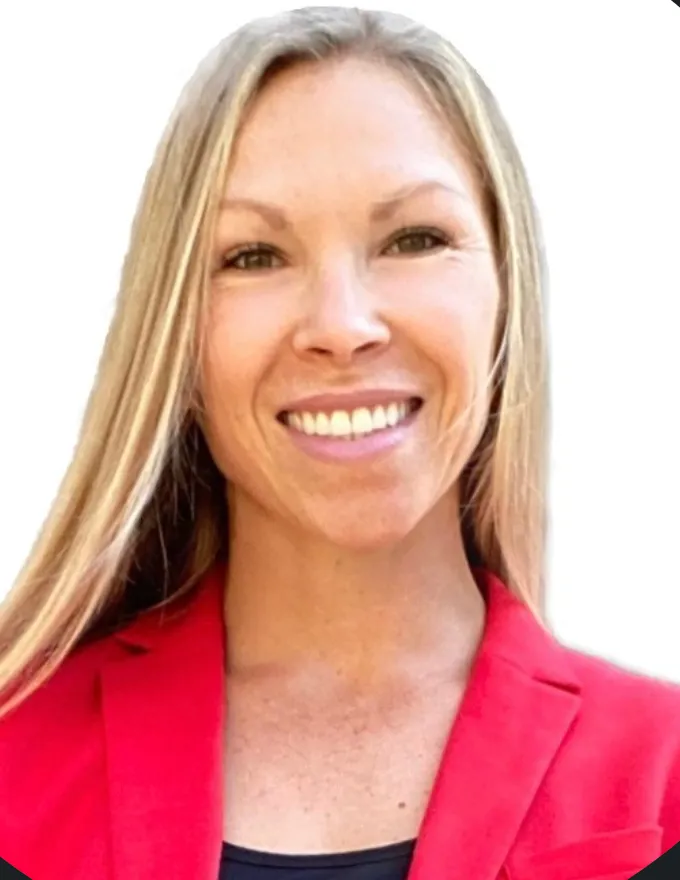
Jessica Wright
Jessica is a growth marketing leader at Walla with 14 years of experience driving revenue across both SaaS platforms and franchise-based local businesses. She specializes in paid media, SEO, and building scalable growth marketing products that help studios attract, convert, and retain more members.
We didn't know how to use Mindbody after 13 years, but after 13 minutes, we know how to use Walla.
Common questions
Is this webinar free?
Yes. Every Walla webinar is free to attend live and free to watch on demand afterwards. All we ask for is your email address. There is no card and no trial attached.
Do I get the recording if I cannot attend live?
Register anyway. We email the replay to everyone who signed up within a day of the session ending, and it goes into the on-demand library shortly after.
Do I need to be a Walla customer?
No. These sessions are about running a studio, not about our software. Most attendees are on another platform when they join.
Who is this for?
Owners and managers of boutique fitness studios, whether you run one location or several.
Watch next



Stop managing your studio.
See Walla in 5 minutes — no pressure, just an honest look at what changes for your business.